
 Newsletter
 Shop
Shop Login
Login Menü
Menü
 Subscribe now



- Retailers and suppliers: exclusive insights
- Market analyses and country reports
- Trends in the DIY and garden market
- Latest news and archive
The demands for climate protection in logistics are rising – and retailers and manufacturers in the home improvement sector, in particular, with their complex supply chains, have set themselves ambitious sustainability targets. Against this backdrop, the global logistics service provider Dachser – which, through its industry-specific solution Dachser DIY Logistics, supplies around 18,000 DIY stores, garden centres, specialist retailers and end customers across Europe every day – has been pursuing a clear sustainability strategy for years.
According to Dachser, the company adopts a fact-based, technology-neutral approach and regards sustainability as an integral part of corporate responsibility. The focus is on investments in low-emission technologies, digital processes and sustainable infrastructure – "always with an eye on impact, transparency and cost-effectiveness", emphasises Patrick Schwab, Department Head of Dachser DIY Logistics. This results in long-term measures across the entire logistics value chain.
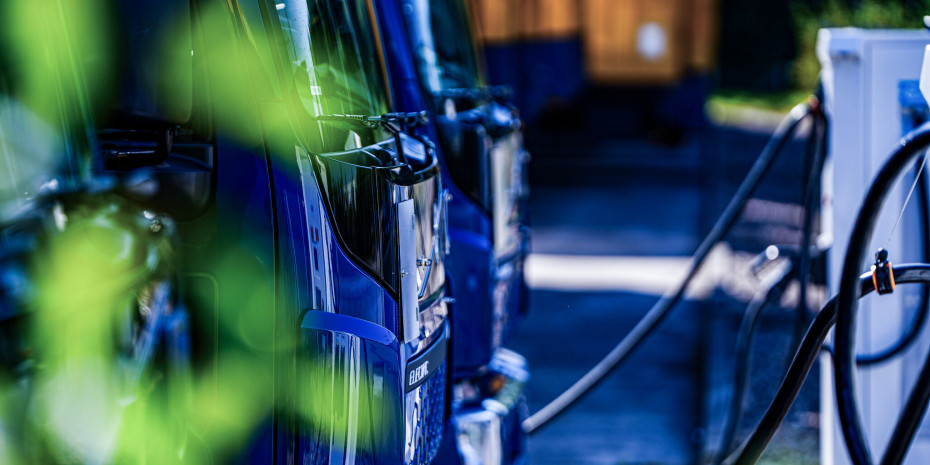
Dachser sees electric mobility as a key driver: more than 190 battery-electric vehicles are in use for the company in distribution and, increasingly, in long-haul transport. The expansion of the charging infrastructure, which currently comprises over 1,000 charging points, is intended to contribute to the development of a scalable, comprehensive system for zero-emission logistics. Added to this is Dachser Emission-Free Delivery, with emission-free delivery zones in 25 inner-city areas across Europe, where, depending on local conditions, electric lorries, electric vans or cargo bikes are used.
For new builds and refurbishments, the company relies on resource-efficient building technology. The new logistics centre in Unna – of great importance for the service provider’s home improvement logistics – combines a green roof, glulam beams, heat pumps, a PV system and charging infrastructure for electric lorries into a holistic site concept.
Beyond its own network, Dachser DIY Logistics has been involved since May 2025 in the "Make it Zero" industry initiative launched by the international DIY trade association Edra/Ghin. The aim is to reduce Scope 3 emissions along the value chain – including the transport of goods. This collaborative approach focuses on common standards, data transparency and knowledge transfer.
"To drive decarbonisation forward globally, the entire industry must act in unison," says Schwab. "We are constantly evolving by utilising…


 Newsletter