
 Newsletter
 Shop
Shop Login
Login Menü
Menü
 Subscribe now



- Retailers and suppliers: exclusive insights
- Market analyses and country reports
- Trends in the DIY and garden market
- Latest news and archive
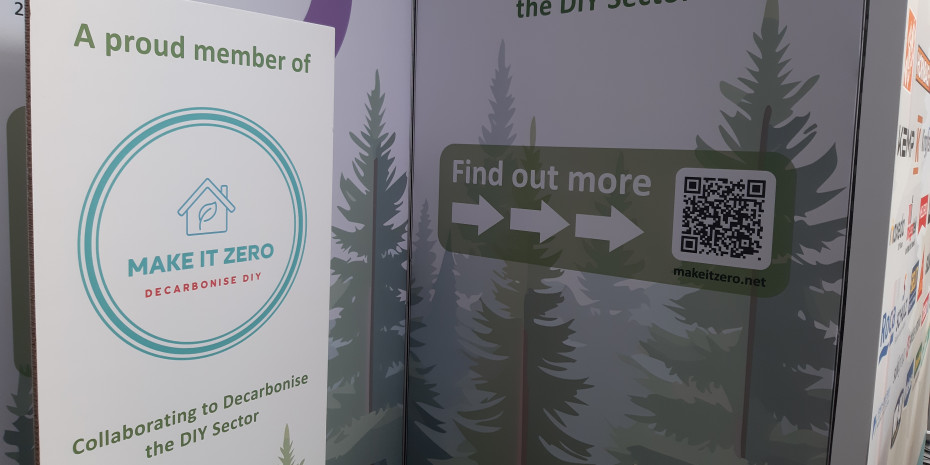
During the Global DIY Summit 2026 in Amsterdam, the Make It Zero initiative presented its strategy for low-carbon and circular plastics. The aim is to achieve a minimum of 35 per cent recycled plastic in the plastics used in DIY, renovation and gardening products by 2035.
“By committing to increasing the proportion of recycled plastic in DIY products, we are not only reducing emissions but also helping to build stronger circular markets and accelerate the transformation of our industry,” says Erwin Van Osta, President of Edra/Ghin.
The ‘Make It Zero’ initiative, launched by the association and supported by WSP, has the potential to reduce production emissions across the entire DIY sector by 15 per cent, which corresponds to approximately 6.3 million tonnes of CO₂e (CO2 equivalent). With a target recycling rate of 35 per cent, the sector aims not only to reduce emissions from product manufacturing but also to accelerate the growth of markets for recycled materials and demonstrate the DIY sector’s leadership in the decarbonisation of materials.
Within the DIY sector, plastics account for around 5 per cent of all production emissions and are used extensively across all product categories. Recently, there has been a significant increase in product-related guidelines driving the decarbonisation of products and the use of more sustainable materials. Consequently, in the face of increasing pressure from regulators, investors and customers, plastics have become a preferred material for credibly demonstrating decarbonisation.
The strategy outlines key actions required of retailers and suppliers to achieve this goal. These include setting clear targets for the proportion of recycled materials, embedding recycling requirements into procurement, integrating recycled plastics into suppliers’ roadmaps, improving design and manufacturing processes, and expanding the use of recycled raw materials.
This is an important step forward in tackling one of the most complex areas of Scope 3 emissions – the carbon footprint of plastics across the entire value chain.
Jamie Pitcairn
The author has been involved with Make It Zero since its inception. He is Director of Sustainability at the global engineering consultancy Ricardo, which is now part of the WSP Group.
Plastics remain indispensable for many products and supply chains, yet the emissions they generate are significant and are often overlooked. It is encouraging to see a growing recognition that the…


 Newsletter