
 Newsletter
 Shop
Shop Login
Login Menü
Menü
 Subscribe now


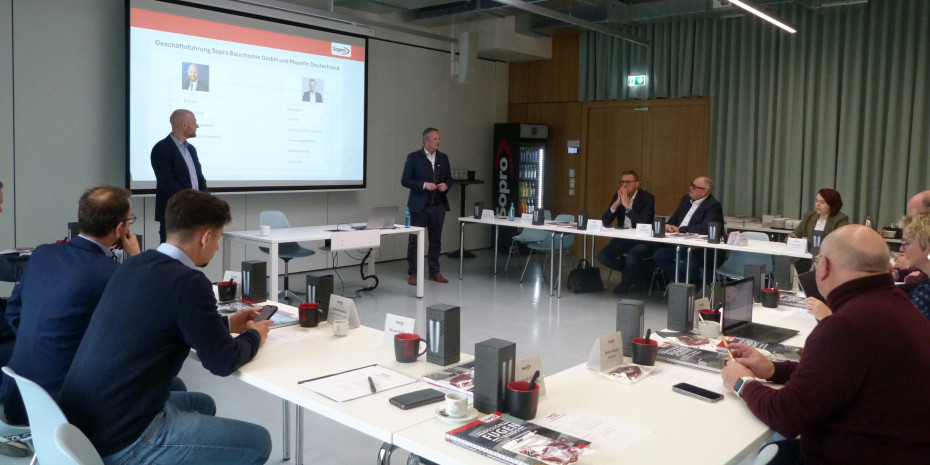
“The focus is on modernization and renovation,” said Sopro Managing Director Jens Schuchmann at this year’s press conference in Wiesbaden, describing the building materials specialist’s priorities for the coming season. The event took place as part of the Profit Day, where expertise on trends, technologies, and solutions in the construction chemicals industry was presented under the motto “Mission Future.” “We have adapted our product systems in the areas of restoration, renovation, and modernization,” explained Schuchmann. Sopro has traditionally been very strong in this area. “When there is growth here, we benefit,” he noted.
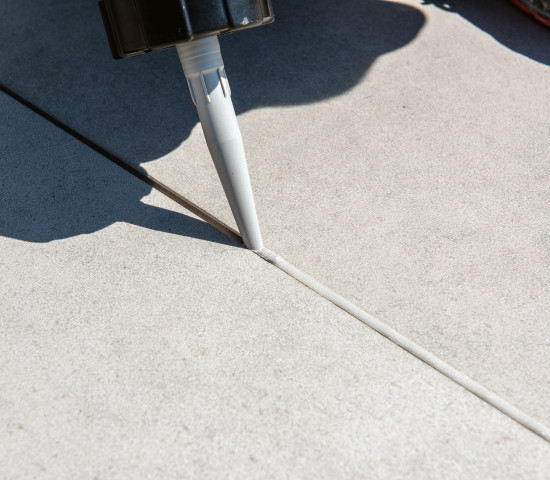
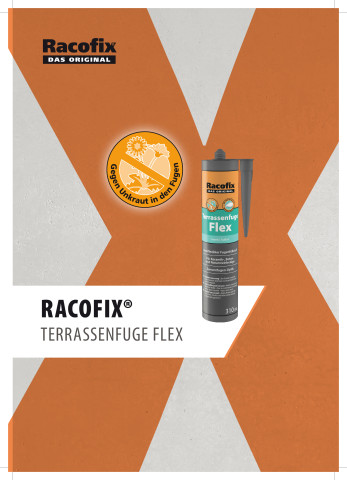
This also applies to the Racofix brand, with which the manufacturer serves the DIY retail sector. A campaign is currently running with Bauhaus, in which a bathroom renovation is being raffled off. Additionally, Racofix plans to refresh its product range in 2026, for example with the Flex patio joint sealant, for which the supplier highlights its weed-preventing effect using specially developed displays at the point of sale.
Another new product is the Racofix Wall and Installation Adhesive: This gray, single-component, ready-to-use polymer-based hybrid installation adhesive, with its high initial adhesion and fast curing, is suitable for fixing concrete and natural stone walls.
Racofix performed well last year against the trend, reported Schuchmann’s fellow managing director Sebastian Kammerer, citing GfK figures for the tile and building materials sector. In the DIY segment, consumer researchers report a 5.5 percent decline in tiles and a 1.6 percent drop in building materials.
He cited excessive inventory levels in the retail sector, which have been gradually reduced, as one reason for this. However, the tile market in general is also at a historically low level. For a company like Sopro, which focuses 75 percent of its business on tiles, this presents a challenging outlook.
Nevertheless, the mood in Wiesbaden remains optimistic: “We see positive signs,” says Schuchmann. By this he means the “strong increase in orders” in the main construction sector, the comparatively stable development in non-residential construction, and what he emphasizes as the “tender shoots” in residential construction. “We have a huge demand for housing, and it’s only getting bigger,” he emphasized.
At the same time, home ownership is becoming more expensive and uncertainty is high, his colleague notes. One reason for the rising costs: construction is becoming increasingly complex. “There are more energy requirements, more technology—as a result, there’s no money left for tiles and the like.” He would have liked to see more momentum from the new federal government, but so far he sees no improvements for the trades and instead more bureaucracy.
Regulations at the European level are also a major thorn in the company’s side, such as the EU Deforestation Regulation (EUDR), the Packaging Regulation, the REACH Chemicals Regulation, the CLP Regulation on the Classification and Labeling of Substances and Mixtures, and the Construction Products Regulation. “A large proportion of our employees, who should actually be developing products, are tied up with these,” Kammerer criticized. Here, he considers solidarity within the industry and a “common voice” to be indispensable.
Industry associations such as the Tile and Natural Stone Trade Association, a federal working group of the Federal Association of German Building Materials Retailers (BDB), are providing support in this regard. Deputy Chairman Sven Blümel and Andreas Beyer from the National Tile Laying Team also attended the press event. They, too, see challenges ahead for the industry, such as the issue of the circular economy. “It’s also a question of whether it’s really that sustainable if a tile is reused after forty years,” Blümel suggested.
Schuchmann highlighted the tile as a sustainable product in and of itself: “The great thing about tiles is that they last a really long time.” He is convinced that this feature needs to be communicated to the outside world. “A certain amount of self-confidence is required here.”
And at Sopro itself, numerous sustainability initiatives are underway, integrated into the corporate strategy: A solar power system is expected to be installed at the finished goods warehouse in the third quarter of this year, which is intended to cover two-thirds of the energy demand. The company is working to reduce water and energy consumption, prioritizes regional production sites, material efficiency, and certifications, and is doing “an enormous amount” with recycled materials in packaging, Kammerer emphasized. As a Bauvista Climate Partner, the company focuses not only on these sustainability aspects but also on products that promote healthy living.
Another issue: “Freely available CO2 certificates are becoming increasingly scarce, and prices for them are rising,” reported Schuchmann. This is a major challenge for the cement industry. Consequently, the company in Wiesbaden is certain that cement-reduced components in their products will remain a key focus. “We have adapted more than 100 formulations with a view to sustainable, CO2-reduced binders,” he said.
Sopro aims to impress with its innovations, such as self-leveling screed with CO2-reduced binders, a waterproofing membrane made from 100 percent recycled material, a new cleaning product line, or swimming pool silicone. With the merger of Rasco Bitumentechnik into Sopro, the company is also expanding its expertise in bituminous waterproofing solutions.
In addition to the many large-format tiles, the managing director cited the trend toward smaller formats with decorative joints as another development. And the glamour factor is also taken care of—glitter joints from Wiesbaden remain popular.


 Newsletter