
 Newsletter
 Shop
Shop Login
Login Menü
Menü
 Subscribe now


Lighting is increasingly evolving into a data-driven, adaptive system: sensors, connected luminaires, and AI-powered controls enable precise, demand-based light distribution that automatically adapts to occupancy, daylight, and usage scenarios. This could be experienced firsthand at this year’s Light + Building trade show.
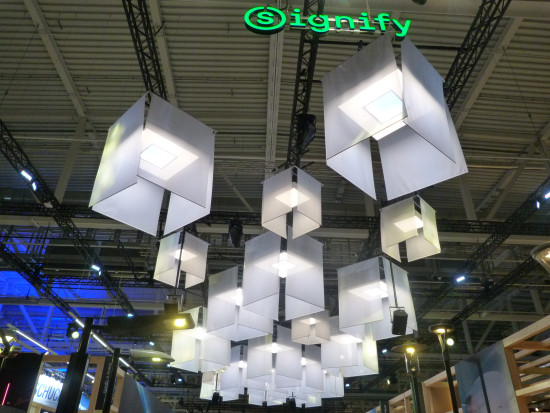
On the so-called Sunlight Boulevard at the Signify booth, for example, daylight luminaires simulated the sun’s path and even shadows. The Phillips Hue brand, which Signify distributes through home improvement stores among other channels, relies on similar technologies, notes Silja Rieke from the communications department. But daylight lighting from Signify’s Nature Connect line is also being used in the home improvement stores themselves: At the color-mixing station, it helps achieve a shade that looks exactly the same in a light-filled home as it does in the—sometimes slightly darker—store. With 3D-printed lights from Mycreation, Signify also addresses the trending topic of customization. Rieke emphasizes that they are also sustainable because they are made from recycled materials and produced locally.
This also aligns with a trend that the organizers have identified in the lighting sector: “Sustainable materials, durable components, and circular product designs underscore the industry’s long-term orientation,” notes Messe Frankfurt. At the same time, lighting remains a central design element in interior architecture: it creates atmosphere, guides perception, and enhances the quality of the environment.
Brennenstuhl also picked up on this with its ambient and camping lights, which are being launched under the new brand name Brennenstuhl Adventure. A campaign was launched in the spring. “The Adventure lights can be charged via a USB-C cable. This allows us to rely on the EU-wide USB-C standard as the connector,” explains Thomas Behrens, DIY Sales Manager.
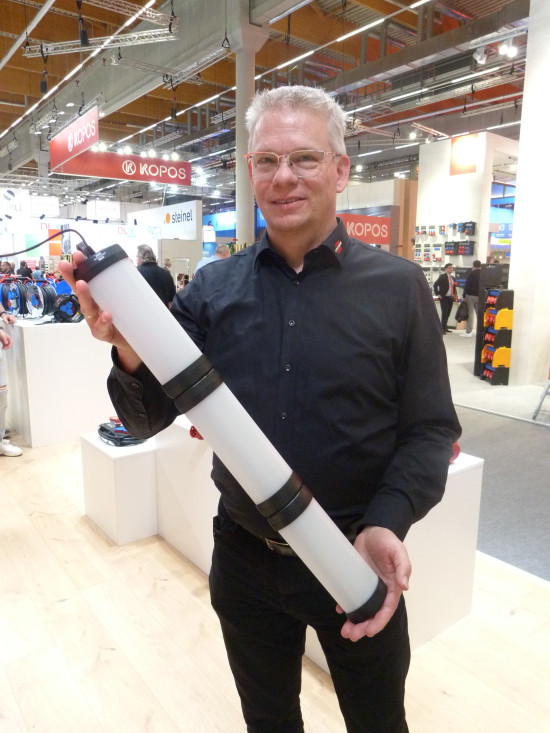
In addition, more and more lights are equipped with interchangeable battery packs that can be used across different devices. Here, too, the company is responding to requirements from Brussels, according to Behrens: “The EU is imposing stricter requirements on battery interchangeability. We are therefore increasingly equipping our devices with corresponding solutions, both for ambient outdoor lights and for handheld lamps.” Another trend is wireless charging. Brennenstuhl has developed a new wireless charging pad for tradespeople that allows not only some Brennenstuhl LED workshop lights but also smartphones to be charged wirelessly.
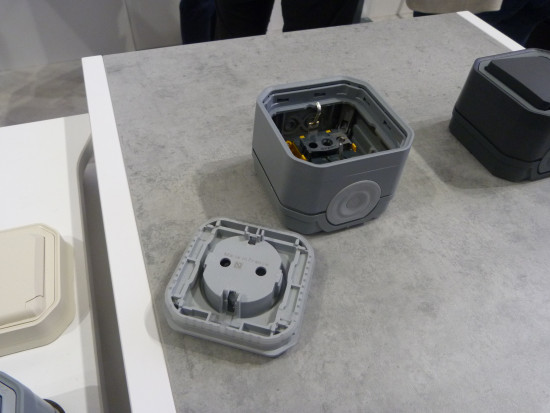
The French supplier Legrand has also set itself the goal of offering users convenient and installation-friendly solutions. It presented the modernized Plexo New surface-mounted switch series for damp locations. The series has been comprehensively redesigned to offer installers greater flexibility and convenience: The inserts can be removed with one hand using a clip system. The housing, which is also removable, allows the base body to be exposed, increasing the space available for wiring and thus simplifying installation. To reduce the number of variants that need to be carried and to facilitate spontaneous decisions on-site, modular switches with a 3-in-1 function were developed. For the point of sale, Legrand offers, in addition to the standard presentation on heavy-duty shelves, display solutions that serve as eye-catchers in the open areas of stores. To complement this, wobblers with QR codes are available, which lead to further product and installation information.
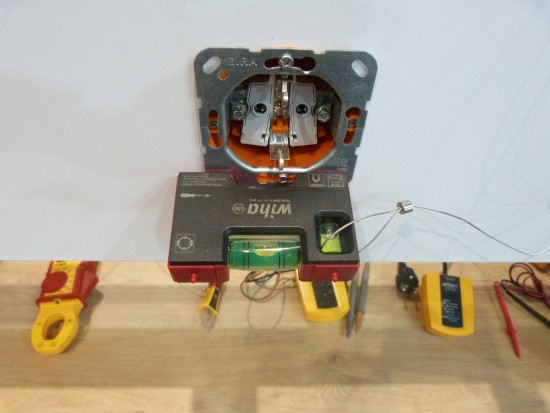
Many functions in a single product—Wiha has a solution for that, too. The Pro Buddy Evo has been available since fall 2025; it’s a compact tool holder set complete with a full-size screwdriver handle and a fine mini-ratchet. The Pocket mini-level is also very compact. It features two centering tips standardized to a 60-mm spacing, allowing it to fit precisely into all standard flush-mount boxes, while a notch simplifies handling with cavity wall boxes. Additionally, two magnets hold the level in place. “Socket installation requires the highest precision—yet conventional levels are often too large or unwieldy for the task. The Pocket mini spirit level from Wiha was developed specifically for these requirements,” explains Anne Jakubowski from the marketing department. The Speed E Pocket Drive electric screwdriver is designed for both professionals and ambitious DIY enthusiasts. “Using it not only speeds up screwing tasks that would otherwise be done by hand, it also makes them easier on muscles and joints,” she notes.
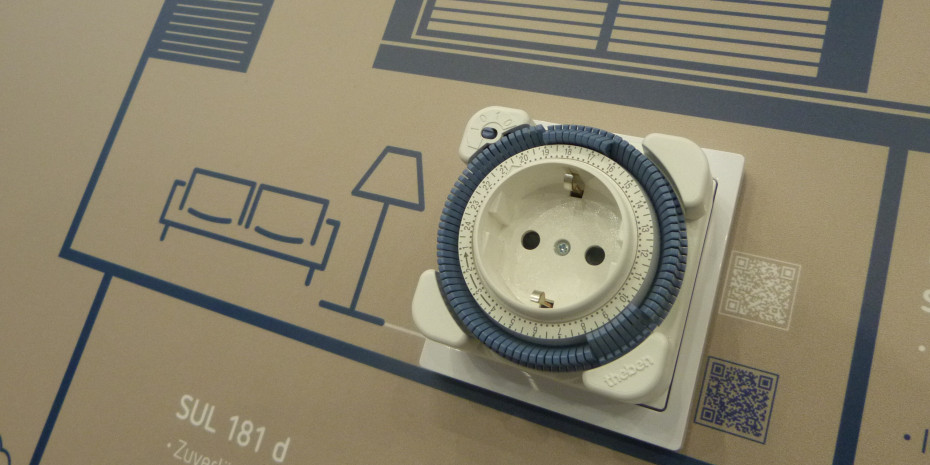
Compact, user-friendly technology was also on display at Theben’s booth—and live: In a challenge, visitors could demonstrate how quickly they could install a room thermostat. No app is required for installation, nor are any screws needed for mounting, explained Carmen Holderied, who is responsible for media relations. The thermostat simply clicks into place. A new flush-mounted power switch, which enables silent lighting control, is also quick to install thanks to pre-assembled connection cables. With its particularly compact design, it can be flexibly installed behind any push-button switch, just like the dimmer from the Mini flush-mounted series. Additionally, renovation of existing buildings is a major topic, which is why the manufacturer offers these special solutions for the renovation of older buildings, for example.
Theben is best known for its timers, she reports. With these products, customers place particular value on durability, Holderied notes. The classic Theben timer has been around for 50 years, which is why the company is releasing an anniversary edition this year.
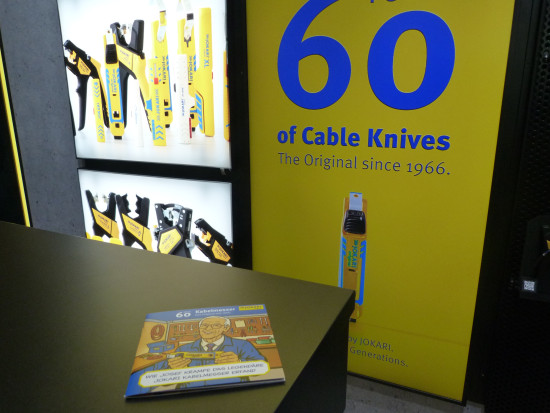
Jokari also had reason to celebrate. The cable cutter is turning 60. The idea from company founder Josef Krampe: To create a tool that simplifies and speeds up wire stripping while ensuring that the copper wires inside the cable are not damaged. The company illustrated its history in a picture book. Employees demonstrated how to use the tools—in addition to the cable knife, there are more than 80 others, all of which are manufactured in Germany—right at the booth. “We love this,” reports Frank J. Goebbels, Managing Director of Sales and Marketing. And visitors kept stopping by time and again. “It’s never empty here,” he says, drawing what he emphasizes is a “mega-good conclusion.”
Feedback from other exhibitors is similarly positive: The new MFT One and PAT One installation and device testers, paired with the Sparkify documentation app, were a major draw for visitors, emphasized Anne Jakubowski of Wiha. The content creators from the electrical community who were assisting at the booth also attracted many interested visitors and fans. The Legrand booth was packed with people. The company is “very satisfied” with how the trade show went. Numerous visitors showed great interest in the new products. Things were also very busy at the Signify booth. A Formula 1 car, which the company presented in the exhibition halls as a nod to its partnership with the AMG Petronas team, drew crowds, says Silja Rieke, adding: “The open booth layout is also a major advantage. Here we can showcase the products in their actual application areas.”
According to a survey by the organizers, 95 percent of visitors were satisfied with their visit to the trade show and stated that they had achieved their goals. An equal number rated the exhibition offerings positively. From March 8 to 13, 2026, a total of 144,767 visitors from 143 countries came to Frankfurt am Main. 1,927 exhibitors from 49 countries presented technological solutions—ranging from the electrification and networking of buildings to lighting and design concepts for architecture, urban planning, and interiors. The next Light + Building will take place from March 5 to 10, 2028, in Frankfurt am Main.


 Newsletter