
 Newsletter
 Shop
Shop Login
Login Menü
Menü
 Subscribe now


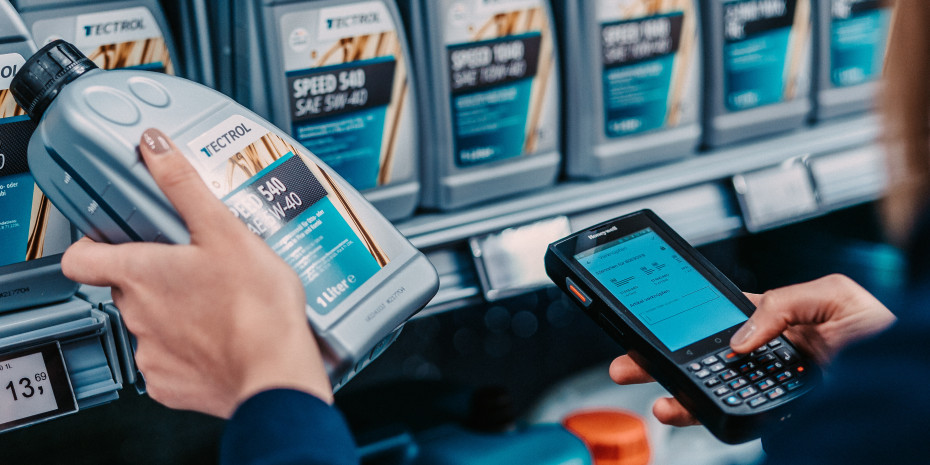
The DIY retail sector is undergoing a period of realignment, as OMS Retail notes: After years of significant fluctuations, the market is slowly stabilizing, yet sales are stagnating and competitive pressure on retail space is steadily increasing. Product ranges are evolving differently, promotions are gaining importance, and at the same time, staffing flexibility in stores is decreasing. For many home improvement stores, this raises a key question: How can large retail spaces and complex product ranges be managed efficiently under these conditions?
In day-to-day operations, the limitations of traditional processes are clearly evident, OMS Retail adds. Price changes, promotional adjustments, or seasonal updates are time-consuming and error-pronem – especially where prices are still updated manually. Customers, however, expect transparent pricing information and personalized advice. “The demand for speed and service is growing, while resources are becoming scarcer,” explains Christoph Lange, ESL expert at OMS Retail.
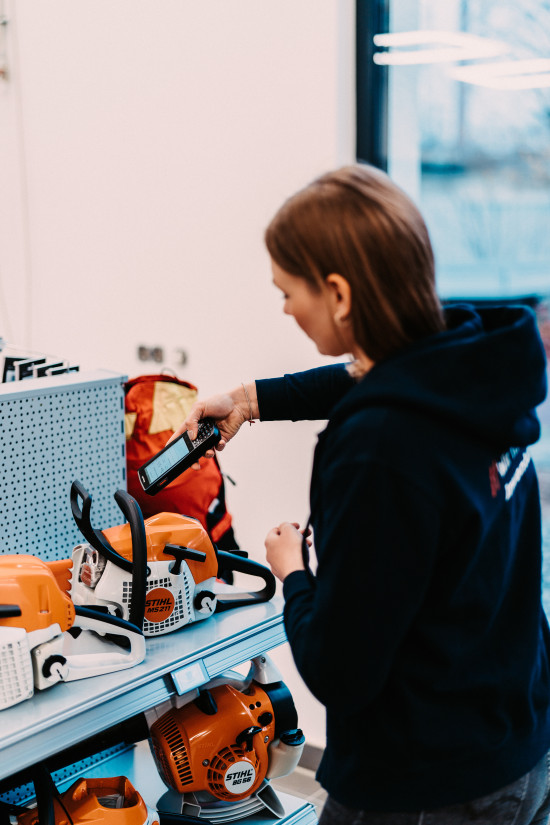
Against this backdrop, retail technology is gaining relevance in the DIY sector. Electronic shelf labels (ESLs), already established in the grocery retail sector, are evolving into an operational management tool that can significantly ease the burden on stores in their day-to-day operations. “Especially in home improvement stores with thousands of items and frequently changing prices, paper-based processes quickly reach their limits,” explains Lange. ESLs enable centralized price control, ensure up-to-date, legally compliant price displays, and reduce manual tasks. They can create transparency, accelerate price promotions and product line changes, and give employees more time for customer consultation – especially in product categories that require extensive advice, such as tools, building materials, or garden accessories.
“Electronic shelf labels are far more than just digital price displays in the DIY sector. They simplify processes, prevent errors, and relieve employees of routine tasks. This creates space for what really matters: personal consultation,” says the ESL expert.
However, the successful use of ESLs depends not only on the technology but also on smooth implementation in the store. This is exactly where OMS Retail comes into play. As a Europe-wide service provider for labor-intensive tasks, OMS Retail supports DIY retailers in the introduction of electronic price tags – from planning and installation to ongoing maintenance and recycling. With a proven route concept, experienced teams, and standardized processes, the service provider promises to efficiently execute even large-scale rollouts without disrupting store operations.
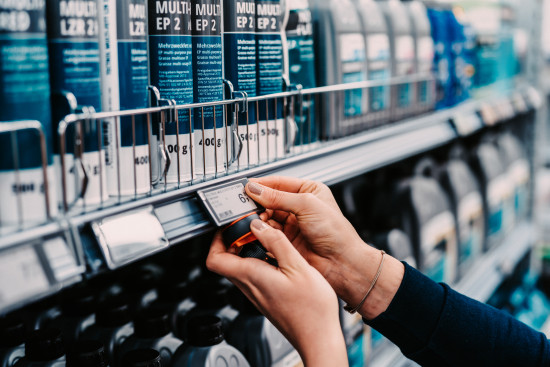
In addition to price labeling, the data infrastructure plays a central role for a future-proof DIY retail sector, Lange notes. High product availability, reliable inventory data, and transparent processes form the basis for well-informed decisions.
In addition to ESL, OMS Retail supports retailers in the area of in-store services, such as the installation of modern shelf-monitoring systems.
These provide real-time data on inventory and customer behavior – “a key to more precise assortment planning, greater product availability, and fewer out-of-stock situations,” OMS Retail is convinced.
In the area of inventory management, OMS Retail also relies on its software partner Stripes. The cloud-based solution enables structured, precise inventory tracking and can thus simplify inventory processes. The company emphasizes that this is particularly a solution for large-scale stores with complex product ranges: inventory becomes more transparent, discrepancies are detected faster, and follow-up measures are initiated in a more targeted manner. “This transforms inventory from a mandatory task into a tool for process optimization,” emphasizes Lange.
Retail technology demonstrates its added value where digital solutions are consistently integrated with operational implementation. Electronic price tags, shelf-monitoring systems, and digital inventory management with real-time queries need not be isolated measures; they can serve as building blocks of an integrated retail strategy. Through the combination of technological expertise and operational experience, OMS Retail positions itself as a partner that supports the DIY retail sector across Europe in the implementation of digital concepts – “measurable, scalable, and close to the market.”


 Newsletter