
 Newsletter
 Shop
Shop Login
Login Menü
Menü
 Subscribe now



- Retailers and suppliers: exclusive insights
- Market analyses and country reports
- Trends in the DIY and garden market
- Latest news and archive
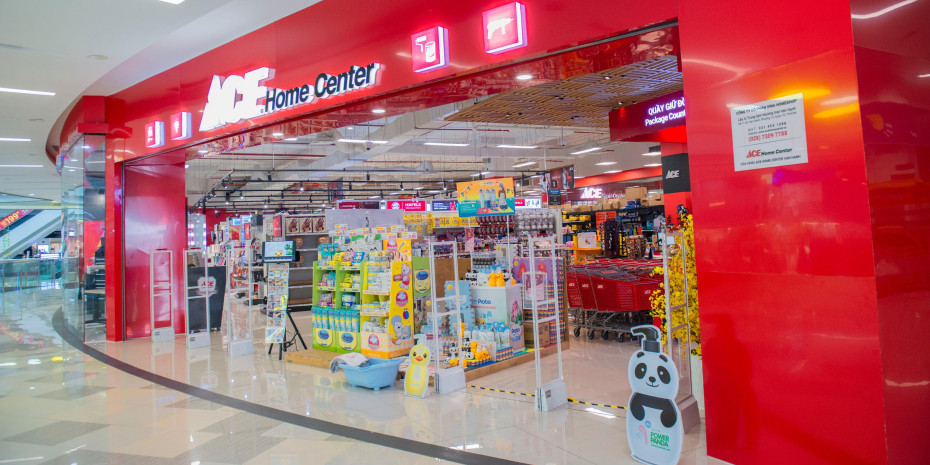
No one could have predicted that 22 November 2019 would end up being one of the worst possible times for Ace Home Center to open its first store in Vietnam and introduce not only a foreign brand, but also a modern retailing concept that had been unheard of in the country’s home improvement market.
A little over a month after the home improvement heavyweight and its Vietnamese franchisee Vina Home Shop welcomed shoppers to the inaugural Ace Home Center store in Ho Chi Minh City’s Van Hanh Mall, a novel coronavirus disease that would later be known as Covid-19 broke out and rapidly spread. As contagion widened, Asian economies enforced some of the world’s most stringent anti-Covid-19 measures to mitigate the transfer of the virus that would eventually still kill 7.1 million people worldwide. Stay-at-home mandates, social distancing rules, restrictive travel protocols, school shutdowns, and the closure of "nonessential" establishments were implemented in phases across Asia and the rest of the world.
By March 2020, the coronavirus disease was declared a global pandemic.
In Vietnam, where home improvement was categorised as a nonessential business, Ace Home Center soon found itself unable to fully operate its newly minted store -- just when it had started introducing itself and the concept of a one-stop home improvement shop to a highly fragmented market.
"In hindsight, the timing could not have been more difficult: we were still building brand awareness, still training a team that had never worked a single day in a mature DIY retail format, and then the government classified home improvement as nonessential during the strictest lockdown phases. That meant our newest, least established store was closed or severely restricted for extended stretches while we were still trying to prove the concept [had] a market at all," Ace Home Center Vietnam managing director Allan Rey Espiritu Lim told DIY International.
Determined to survive the business impacts of the biggest health crisis in recent history, Ace Home Center recalibrated its strategy to focus on building strong foundations for efficient retailing while waiting for footfall to return.
"We survived that period by treating it as a forced pilot for capabilities we would have needed eventually anyway: e-commerce and delivery, lean staffing models, and tight cash discipline. We pushed hard into online ordering and home delivery, renegotiated with landlords and suppliers for flexibility rather than concessions we…


 Newsletter