 Newsletter
 Shop
Shop Login
Login Menü
Menü
 Subscribe now



- Retailers and suppliers: exclusive insights
- Market analyses and country reports
- Trends in the DIY and garden market
- Latest news and archive
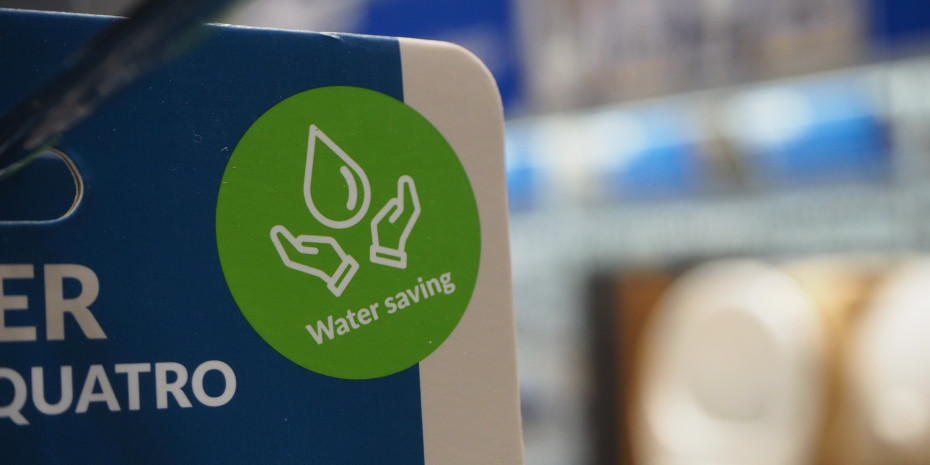
Europe is ready to save water, but significantly underestimates its own water consumption in the process. This is the conclusion reached by the Grohe Water Insights survey, which was published at the 2025 ISH trade fair in Frankfurt. The study is based on 20,516 responses from twelve countries across three regions (Europe, the Middle East and North America).
66 per cent of Europeans surveyed expect a water shortage in the near future, and 87 per cent personally consider water efficiency in the home to be important. Despite this awareness and willingness to take action, 79 per cent underestimate their daily domestic water consumption. 22 per cent of respondents believe this to be between one and ten litres per day. In fact, according to the European Environment Agency, Europeans consume an average of 144 litres per day.
The results show that the main motivation for water conservation in Europe is financial (34 per cent). This outweighs reasons such as protecting resources for future generations (23 per cent) and protecting the environment (23 per cent).
Whilst the majority in Europe value water-saving measures in the home, more than a third have not yet installed any water-saving products. The main barriers to adoption among those who do not plan to use water-saving solutions are: the perceived high cost of water-saving appliances (28 per cent), a lack of information (25 per cent) and a lack of interest (24 per cent).
72 per cent of respondents in the Middle East consider it likely that another country within their region will experience a water shortage. The figure is 65 per cent in Europe and 55 per cent in North America. 80 per cent of respondents in the Middle East stated that water efficiency is important to them in their daily lives. In Europe and North America, the figures are 69 per cent each. This part of the world also leads the way in the use of water-saving products, at 60 per cent, ahead of Europe (57 per cent) and North America (47 per cent). “The Middle East experiences the highest levels of water stress, which is consistent with the heightened awareness and proactive measures taken there,” explains Grohe.
“For most people in Germany, saving water has long been a matter of course,” emphasises the Federal Environment Agency (UBA). According to the agency, drinking water consumption in Germany has fallen from 144 to 126 litres per capita per day (2022) since 1991. This has been achieved, for example, by replacing old household appliances such as…


 Newsletter