
 Newsletter
 Shop
 Login
 Menü

 Subscribe now


"Since when has relaxation actually become something that needs to be optimised?" With this provocative question, Ivonne Seifert from Messe Frankfurt opened the trend outlook for Heimtextil 2027. "We track our sleep, improve our routines, become more efficient, measure our performance – but when we close the door behind us at the end of the day, do we really want a space at home that demands even more of us?" she asked the audience.
Entitled "Home maxxing – the performance of everyday living", the exhibition space – once again curated by the Milan-based design platform Alcova – aims to address this tension. It starts with a paradox, explained design expert Joseph Grima: the home, the most personal retreat, suddenly becomes a stage, a space of performance, where one shares one’s daily self-maximisation with others via social media. At the same time, homes themselves must also meet higher technical standards and save more energy.
"In light of everything that’s emerging, there’s also a counter-trend: ‘Friction-Maxxing’ – a pressure-relief valve where people are returning to old practices, such as writing letters on typewriters or listening to old vinyl records. People are escaping from everything that’s so insanely practical and fast," he explained.
The trend, dubbed ‘Hyper Presence’ by Alcova, reflects a shift away from interfaces towards a ‘material honesty’, as his colleague Alice Moretto describes it. Raw, unfinished surfaces dominate here. There are few objects, but those that are present have been carefully selected. People are invited to rediscover old traditions. “The home can be performative; it can protect; it can maximise; but it can also be used as a ritual space that becomes, so to speak, the antithesis of technology: people collect stones, use Palo Santo – as a sort of competition with themselves to see if they are capable of remembering old traditions,” says design expert Valentina Ciuffi.
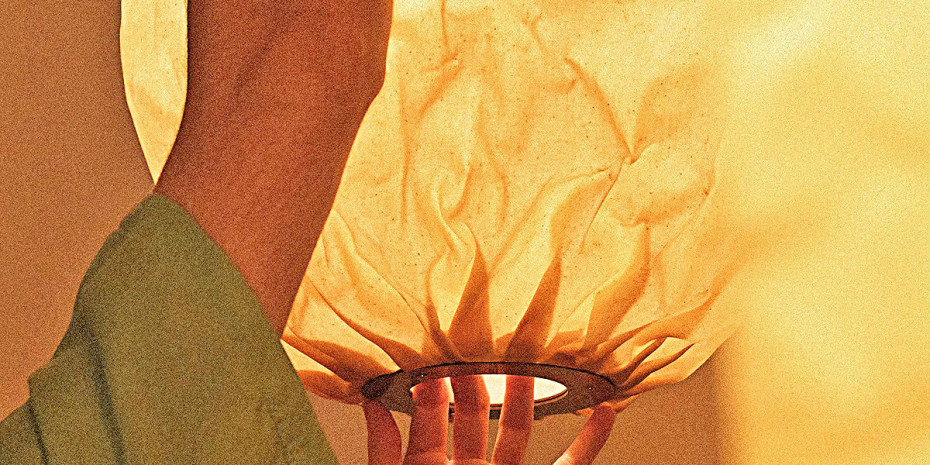
Spaces can be experienced with all the senses – through tactile materials, lighting atmospheres and scents: a pendant light featuring a cloth soaked in beeswax gives off its own scent as soon as it is switched on and thus warmed.
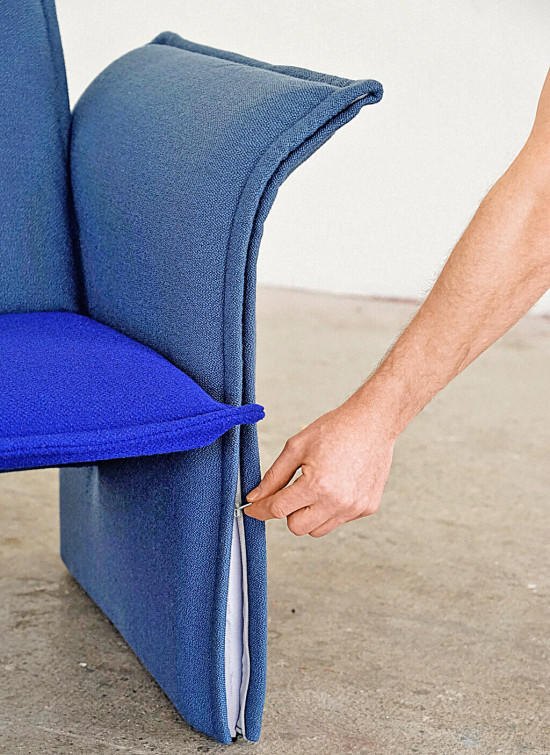
A sofa cover made of compressed wood fibres blends in with the surface, helps regulate temperature and humidity, and changes over time as well as through the people who use it.
How people interact with objects is also a theme in ‘Inside out’: a chair can be pulled apart, revealing what normally remains hidden. A transparent smartphone case offers a glimpse of the technical components. This is even the case with handcrafted items: the leather cover for an armchair is cut into pieces and held together with visible metal clips. “This trend shows how difficult it has become to convince consumers in an age of black boxes and artificial intelligence,” explains Ciuffi.
A house can do without any external cladding at all; only the structural framework is visible – thereby creating a new aesthetic. Whilst water pipes or cables used to be concealed and thus made to appear softer, today people feel comfortable being honest and transparent – without, however, becoming completely absorbed by it. We need that friction, Grima notes.
The ‘Staged Competence’ trend demonstrates how a technical appearance can become a design element. Acoustic panels no longer serve merely to reduce noise; they become works of art in their own right, adorning furniture or walls. Micrographics – symbols typically found in technical data sheets – are also printed onto textiles, lending them an ironic touch, according to Ciuffi: “It’s purely decorative, but serves no practical purpose.” This tongue-in-cheek approach contrasts with the otherwise rather dull technical language. At the same time, the lettering serves as a kind of reassurance, offering a sense of reliability in an age of uncertainty.
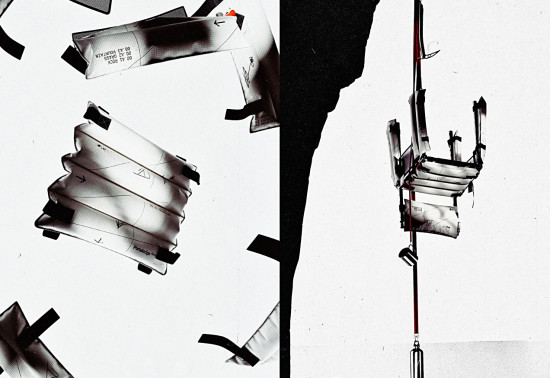
A similar phenomenon can be observed in a trend that is particularly prevalent amongst the younger generation: functional clothing for everyday life. “They head out to the bus stop as if they were setting out to climb Mount Everest or trek through the rainforest. This means they’re ready for anything – even if it’s actually pointless, given their daily routine,” explains Ciuffi. This trend has now spilled over from fashion into the furniture industry. For instance, you see chairs upholstered in technical fabrics. One chair, for example, is entirely upholstered with outdoor materials, and the frame itself consists of poles normally used for camping or mountaineering. “Everything is engineered in some way; even furniture is prepared for a weather disaster,” she notes.
Moretto describes this trend as a “physical manifestation of being prepared”. It is intended to help people cope better with instability. “There is a vague, paralysing fear, particularly amongst the younger generation, of the climate crisis, of global upheavals and political emergencies. They feel that one must be prepared for whatever might happen.”
Grima observes a development that underlines how “important textiles are, particularly in the domestic environment, because they offer a way to humanise interiors that are often highly technical. They help to counterbalance this technical excess.” Alcova deliberately works with this contrast. The design platform aims to create living space designs that reflect people’s longing for rituals, for friction and, according to the trend researcher, the “inevitable technical presence”.
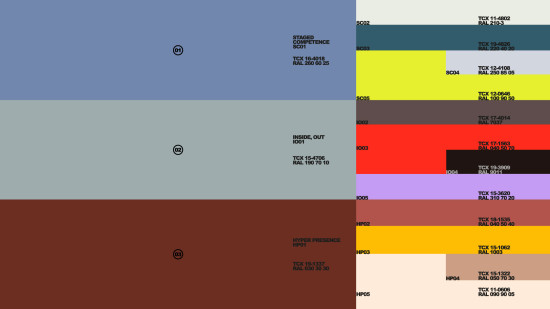
The colour palette plays on the contrasts between the three trend worlds: ‘Staged Competence’ focuses on cool blues, greens and mineral tones that convey technical precision and functionality, accented with bright yellow. ‘Inside Out’ combines dark graphite and anthracite tones with bold red and soft violet to create contrasts that appear almost artificial.
‘Hyper Presence’ brings a warm, earthy quality to the colour selection with rust red, orange, ochre and cream white, thereby forming a deliberate counterpoint to the cooler, more technical colour worlds.
The trends will be on display during the trade fair from 12 to 15 January 2027 in the Trend Space in Hall 4.2.


 Newsletter