 Newsletter
 Shop
Shop Login
Login Menü
Menü
 Subscribe now


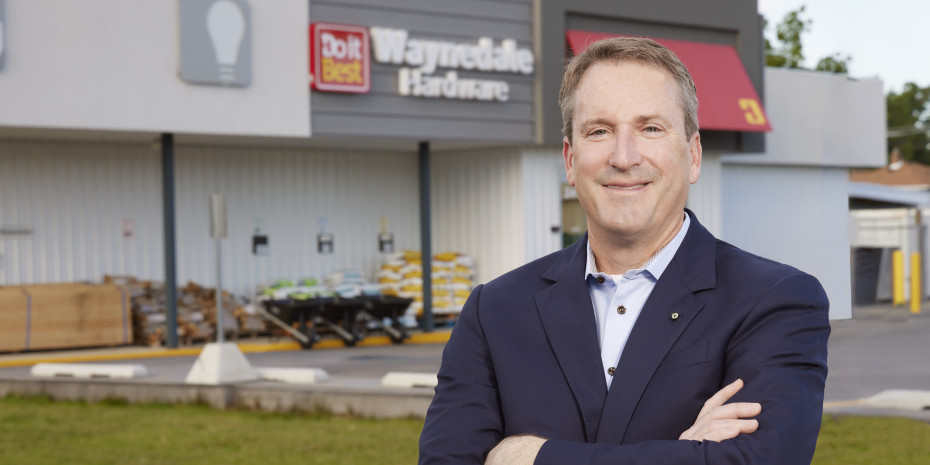
In terms of the number of stores, Do it Best Group is the largest cooperative of independent hardware retailers in the U.S. Just under two years ago, it expanded significantly when it acquired its competitor True Value – itself a one-time cooperative which, at the time, had even more members. A key factor that made the insolvent acquisition target attractive to Do it Best Group was its outstanding brand recognition.
Dan Starr, CEO of Do it Best Group, spoke at the Global DIY-Summit about the challenge of maintaining this appeal for the next generation of younger customer groups. DIY International had the opportunity to follow up on this in a detailed interview.
Our interview is taking place in Amsterdam, in Europe. When you compare home improvement stores in the USA with those in Europe, where do you see the biggest differences?
Dan Starr: I'm operating on a very small sample size. I went to see a number of stores just yesterday as part of the store tour organised by the Global DIY-Summit.
It's the first time you are in Europe?
I've been to Europe before, but it's the first time I've been able to visit stores. The stores they took us to were large format. There were a number of similarities, for example when it comes to wayfinding, categories, store design. But what was surprising to me was one very large store. In the U.S., I would have thought that it would be more oriented to the pro, but the vast majority of their business is DIY. And I was surprised that it was so large and that it wasn't very dense, meaning the planograms, the gondolas, it‘s very spread out. In the U.S. when you're going for a DIY customer, you typically find that retail is very compressed. narrowed down probably about 10,000 square feet (about 1,000 m²) at the most.
Let's talk about the U.S. We saw last year a decrease in sales in the U.S. market, I‘m referring to the US Census Bureau. How is the situation for the moment?
For us, our sales are up a little bit. Maybe we're doing a little bit differently than the total statistics would reveal. Where it's down for us is in what we call commodities: building materials and things like that, because housing has been impacted, the interest rate environment in the United States has gone up, you've got a lot more people who are just kind of holding in place. So the housing market is really limited. But in the normal categories or hardlines categories of paint, plumbing, electrical, those things are actually performing well.
And your prognostics for the rest of the year?
The impact on inflation because of the military action going on not just in Russia, Ukraine, but of course, also in Iran. That has created so many problems of both uncertainty for business as well as inflationary trends. I see sales decline as a result of that because it is impacting an individual homeowner's disposable income.
At the same time, your administration imposes tariffs to strengthen productivity in the U.S. Does it work?
No, I don't believe that it's had any impact on productivity in the United States. I think it made the cost of goods more expensive. And that sort of protectionist approach, I don't know any economist who says that that's a good idea.
That also means that you do not sell more American products in your stores?
Our challenge is that our organisation is fairly large. The idea that we could shift buying habits of millions of product that is already on the water, sometimes from China, sometimes from Southeast Asia, from Korea, from India, from Mexico … We have buying orders for product that go out months, even years.
And the idea that in response to a tariff, we could just shift it all right away, is unrealistic. We can be agile, but there are areas where we count on long-term commitments in order to be very efficient. And efficiency leads us to measuring out with specificity how much of a particular product we're going to need over a seasonal business cycle and be very clear with our supply chain about what that needs to look like. Those things don't change that fast. That's impossible.
Since a few years, we see new competitors from Asia, from platforms like Shein or Temu. Are they a threat for the home improvement industry in the U.S.?
We have not seen that yet. They could be.
In Europe, we are discussing a lot about. It's seen as a threat for the whole retail industry because the consumers are trained to be very price sensible.
We've already been subject to that kind of pressure through Amazon. They were very disruptive to retail for many years because they were featuring very low prices with free delivery to people's homes. They used price and convenience to completely undercut retail. And it was very effective. DIY is partially protected in the U.S. because customers will want to come in because they need expertise and guidance. They need the range of products to complete a project, not just one product.
And perhaps they led you to improve and to innovate your own processes.
Absolutely. We support online retail delivered to people's homes from our distribution network. So we are competing in that space now.
Another major issue discussed in Europe is sustainability. Is it important to consumers in the U.S.?
In my opinion, consumers like it in concept. It's attractive. But I don't think it changes behavior at all. I think the U.S. consumer is more affected by what I would call charitable intent. There's a company in the U.S. they sell socks. And part of their marketing strategy is that for every pair of socks you buy, they'll donate a pair of socks to someone in need in a country like Africa or Central America. Consumers respond very much to mission-based programs like that. I think those have the potential to change behavior in the U.S. more so than a promise of this kind: what you're buying now is made with 80 percent sustainable product or recycled product. They like it, it makes them feel better about the purchase, but I don't think that it motivates the purchase in the first place.
What does it mean for you when it comes to the Make It Zero initiative of Edra/Ghin?
That’s a laudable goal. My position is, in our organisation, we absolutely need to try to reduce energy consumption generally, if we can. I'm supportive of it.
What is your recap of the last year when it comes to consumer confidence and your sales?
Looking at my company in the last year, I think we managed really well in a difficult environment. The other issue that we were uniquely faced with, we acquired this company True Value in November of 2024, a bankrupt company. A lot of our last year has been spent trying to integrate and reduce cost in that company. Do it Best is very profitable, whereas the True Value organisation is very unprofitable.
How important are your international operations?
We have retail operations in Latin and Central America and some Pacific islands, as well as in Southeast Asia, a large member in the Philippines, and one location in Saudi Arabia.
Any ambition to come to Europe?
In my view, that market already has strongly positioned and well-established players.
What was the motivation for Do it Best Group to take over this competitor?
The biggest motivation was: We claim that we are the champion of independents when it comes to hardware stores, home centers, and lumber yards. We knew that through the bankruptcy there were a lot of family-owned businesses that were going to be harmed. Our motivation was: somebody has got to step in and provide help to make sure that these stores continue to be served. We're doing that in a way that will protect our shareholders.
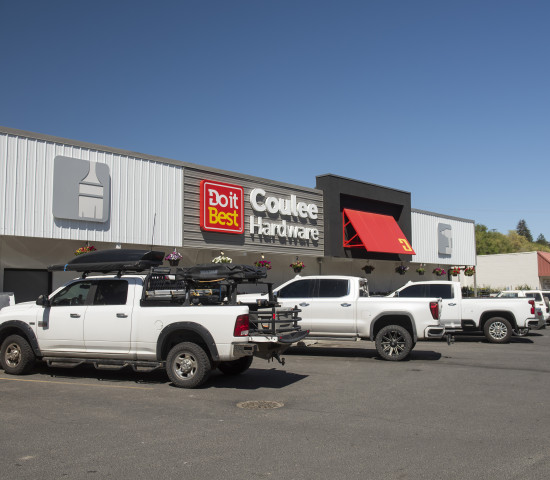
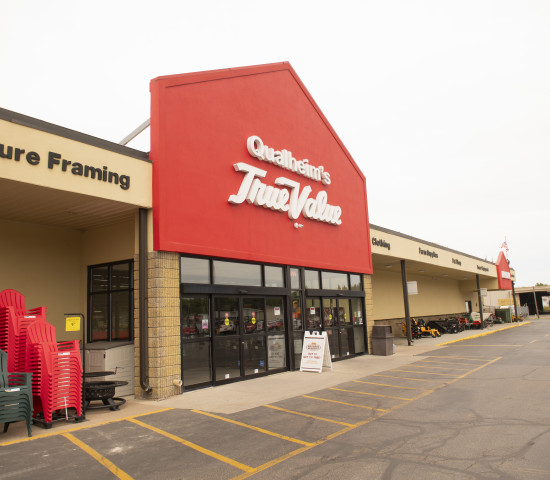
Now you have two retail brands. I didn't get exactly what is really the difference between a Do it best store and a True Value store.
That's a great question because sometimes you would walk in and would not know: which is it? But we develop some refinements so that there is a real difference between the two.
But they are targeting the same consumer groups.
Yes. But as long as they are a member, we're not going to put a store right across the street to them. We're not going to make a new member only to cannibalise the same retail sales.
What are the different strengths of both brands?
The legacy brand of True Value is very well known in the U.S. And the strength of that brand is that it is associated with a local hardware store. We want to use that brand more prominently on smaller hardware store environments and then try to use the Do it Best brand when it’s more about the pro.
In Europe, we see a strong trend that DIY stores try to get more audience among the tradesmen. The same with you?
Yes. And that has historically been our strength. Do it Best has served lumber and building material dealers very well. And most of the co-ops don't do lumber and building materials.
That’s something that Home Depot has struggled with. Small jobbers pick up products at a Home Depot. But we serve lumber dealers that are much more significant in their markets than the typical Home Depot. And part of that difficulty is sometimes we take a little bit of dimensional lumber into inventory. So anybody who's done that knows the danger of taking an inventory position in commodity like lumber, because the value can go up and down so quickly.
Let’s just have a short look out to the future. Where do you see Do it Best and True Value in ten years' time.
What a wonderful question. You would see us develop not just more advertising around the True Value brand, but a lot more retail standards in order to address uniformity and consistency of excellence at retail. I think that has suffered a little bit the last few years, when it headed towards bankruptcy. So I see really building the brand and building the retail execution of that, so that ten years from now, you would see a lot more True Value stores, and better operating stores as well.
The questions were asked by Rainer Strnad


 Newsletter