
 Newsletter
 Shop
Shop Login
Login Menü
Menü
 Subscribe now


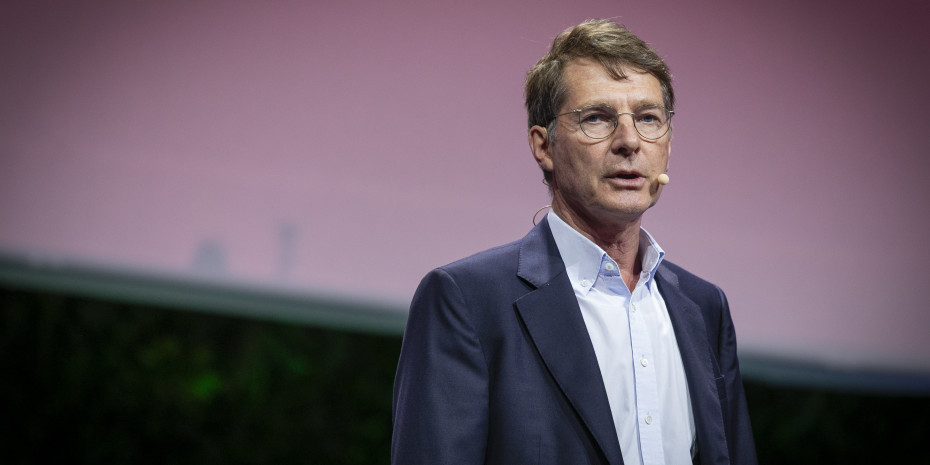
You were elected Chairman of FEDIYMA in 2009 and have been re-elected to this position ever since – even after the association was renamed HIMA. In your view, what have been the biggest changes in the industry during this time?
Reinhard Wolff: First and foremost, digitalisation – in all its forms, for example using social media and influencers to drive narratives, then the realm of apps and marketplaces, or the issue of delivery and dropshipping. For decades, the supply chain was operated under the buzzwords ‘just in time’ and ‘lean’. But since the pandemic and now with the Strait of Hormuz, this tightly synchronised global network has been turned on its head. The pandemic has also triggered changes in consumer behaviour. During the pandemic, people were keeping a low profile; now they’re travelling and partying. The issues of the environment and global warming have also changed. And if you go back even further, you have to say: there have been massive upheavals. The industry as a whole is grappling with this and has always understood how to see the opportunities within it: we tackle things head-on. The industry is alive and well – but we are certainly in challenging times.
Especially in these challenging times, the importance of the relationship between industry and trade is constantly emphasised. How has this relationship developed?
It is, of course, always a supplier-to-customer relationship. There’s no need to argue that away. But both as an entrepreneur and as someone working for an association, I have always seen that it is possible to have sensible discussions. The understanding that we must tackle things together has always been there. That is certainly something that sets the industry apart.
Has this understanding grown?
The issues on which we are currently collaborating as industry and trade are simply more diverse and complex. One example is the Make It Zero initiative: we’re striving to counter climate change wherever we can. Another example is the behaviour of major DIY store operators during the coronavirus crisis, when they assured us in writing that they wanted to work cooperatively with us to solve the problem of the severely disrupted supply chain. And: compared to the past, issues are now being handled more professionally, even on an international level. So that’s really quite good – especially when you compare it to other sectors such as the food industry, where global giants clash.
What was your biggest challenge as HIMA President – what are you most proud of?
Accompanying the changes in the industry, which, incidentally, were also reflected in the topics we presented at the Global DIY Summit. Of course, there were always many discussions behind the scenes to formulate a common position as HIMA together with the national associations. We succeeded in doing this, for example, when payment terms in the EU were to be shortened to 30 days in the midst of the financial crisis – actually to our advantage. But as HIMA, we very clearly worked out a position with the national associations that we did not support this. The fear was that structures on the retail side would break down, with only the strong surviving and the weaker players being forced out. That is not in our interest either, and the industry has coped very well with the 60-day payment term. Ultimately, there are many factors at play. The DIY sector simply has very high margins and can therefore cope with a lower turnover rate – whereas in the food sector, you’ve already sold the yoghurt three times by the time you pay the supplier. Within a matter of days, we issued a clear statement internationally against this plan, for the benefit of the entire industry. The national associations were committed to this, even if perhaps not all member companies were happy about it. But as an industry, we really did react wisely.
Why did you do all this, what motivated you? You certainly wouldn’t have got bored.
For me, HIMA was always a platform for exchanging ideas with European companies and communicating directly with the retail sector. Besides, I’m simply a staunch European and wanted to support this idea at that level. I’ve travelled to 40 or 50 countries and told my family: ‘I’m off to check out DIY stores.’ I didn’t just get to know these countries as a tourist; I met all sorts of people.
I can already guess what the answer will be if I ask you whether it was actually always fun.
Yes, otherwise you wouldn’t do it for 18 years. Of course, it wasn’t always fun; there were also problems, discussions and stressful situations. But you sort those out as you go along.
The questions are asked by Rainer Strnad.


 Newsletter