 Newsletter
 Shop
Shop Login
Login Menü
Menü
 Subscribe now


A new EU directive provides for the reduction of pollutants in paints and varnishes from 2007
There should be a certain amount of movement in the European paint and varnish industry in the near future. The first phase of a new EU directive for the reduction of pollutants in paints and varnishes is due to take effect from 1 January 2007. The incorporation of the directive into national law will also have implications for shaping the product assortment in DIY stores: solvent-based paints will have largely disappeared from the market by the time the second phase is reached in 2010. The Paint Quality Institute (PQI) sees certain advantages for consumers in this development.
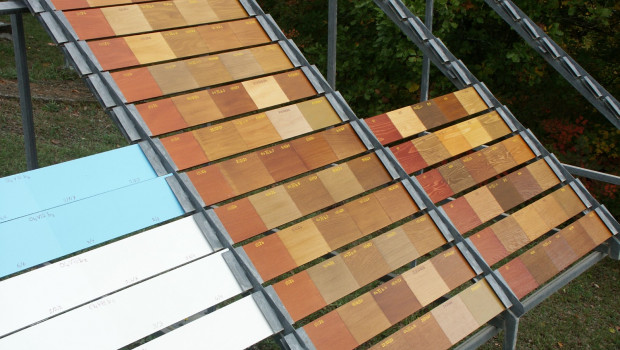
Ludger Küper of PQI Germany identifies a need to act less in the case of emulsion paints than in the product category of varnishes and stains. Water-based acrylic paints, which are fully equal to solvent-based ones in terms of quality and durability, have been permanently established in the product portfolio of DIY stores for a long time already. This message is supported by current test results from PQI's weathering station in the south of France. As Küper describes the project, "For more than a year we have been testing more than 50 different varnishes, paints and stains in Puget Thenier. They include specialist dealer brands as well as DIY store products. All the products are exposed to the same climatic conditions, i.e. precipitation, temperature variations and other environmental influences." The aim is to make a direct comparison as well as to document the durability and/or modification of the characteristics of water-soluble and solvent-based coatings under extreme conditions. The evaluation of these results provides important indications for producers, consumers and dealers in the light of the new EU directive.
Consequences for industry and commerce
First and foremost affected by the current environmental directive are manufacturers and sub-suppliers of the paint and varnish industry. They are obliged to take account of the new limit values in their product development, faced as they are by the threat of sanctions for non-compliance with the legal provisions. What is more, there will in future be a labelling requirement. The product labels must show the relevant limit values and the maximum VOC content (pollutants including volatile organic compounds) of the ready-to-use product in grams/litre. Since many DIY retailers have their range of private labels, which puts them on a par with manufacturers, they must also comply with the regulations. The legally stipulated limit values for pollutants and their harmonisation on the European level will avoid any distortions of competition in the future. This means that companies in the DIY sector must increase their involvement in the manufacture and range of water-soluble coatings systems so that they will be competitive by the year 2010.
Ludger Küper of PQI Germany identifies a need to act less in the case of emulsion paints than in the product category of varnishes and stains. Water-based acrylic paints, which are fully equal to solvent-based ones in terms of quality and durability, have been permanently established in the product portfolio of DIY stores for a long time already. This message is supported by current test results from PQI's weathering station in the south of France. As Küper describes the project, "For more than a year we have been testing more than 50 different varnishes, paints and stains in Puget Thenier. They include specialist dealer brands as well as DIY store products. All the products are exposed to the same climatic conditions, i.e. precipitation, temperature variations and other environmental influences." The aim is to make a direct comparison as well as to document the durability and/or modification of the characteristics of water-soluble and solvent-based coatings under extreme conditions. The evaluation of these results provides important indications for producers, consumers and dealers in the light of the new EU directive.
Consequences for industry and commerce
First and foremost affected by the current environmental directive are manufacturers and sub-suppliers of the paint and varnish industry. They are obliged to take account of the new limit values in their product development, faced as they are by the threat of sanctions for non-compliance with the legal provisions. What is more, there will in future be a labelling requirement. The product labels must show the relevant limit values and the maximum VOC content (pollutants including volatile organic compounds) of the ready-to-use product in grams/litre. Since many DIY retailers have their range of private labels, which puts them on a par with manufacturers, they must also comply with the regulations. The legally stipulated limit values for pollutants and their harmonisation on the European level will avoid any distortions of competition in the future. This means that companies in the DIY sector must increase their involvement in the manufacture and range of water-soluble coatings systems so that they will be competitive by the year 2010.


